
How Hi-Fi, Home Theater and Connected Audio Are Changing the Way We Listen
The world of home audio continues to evolve.
For decades, the traditional Hi-Fi system was built around separate components — a pair of speakers, an amplifier and a source. Today, that foundation remains important, but the way people listen to music and experience entertainment at home is changing.
In 2026, the industry is seeing developments across Hi-Fi speakers, integrated amplifiers, streaming systems, active speakers, home theater and connected audio, with manufacturers continuing to combine traditional audio engineering with modern technology.
For listeners, this means there are now more ways than ever to build a serious audio system — from traditional component-based Hi-Fi to compact active systems and sophisticated home entertainment setups.
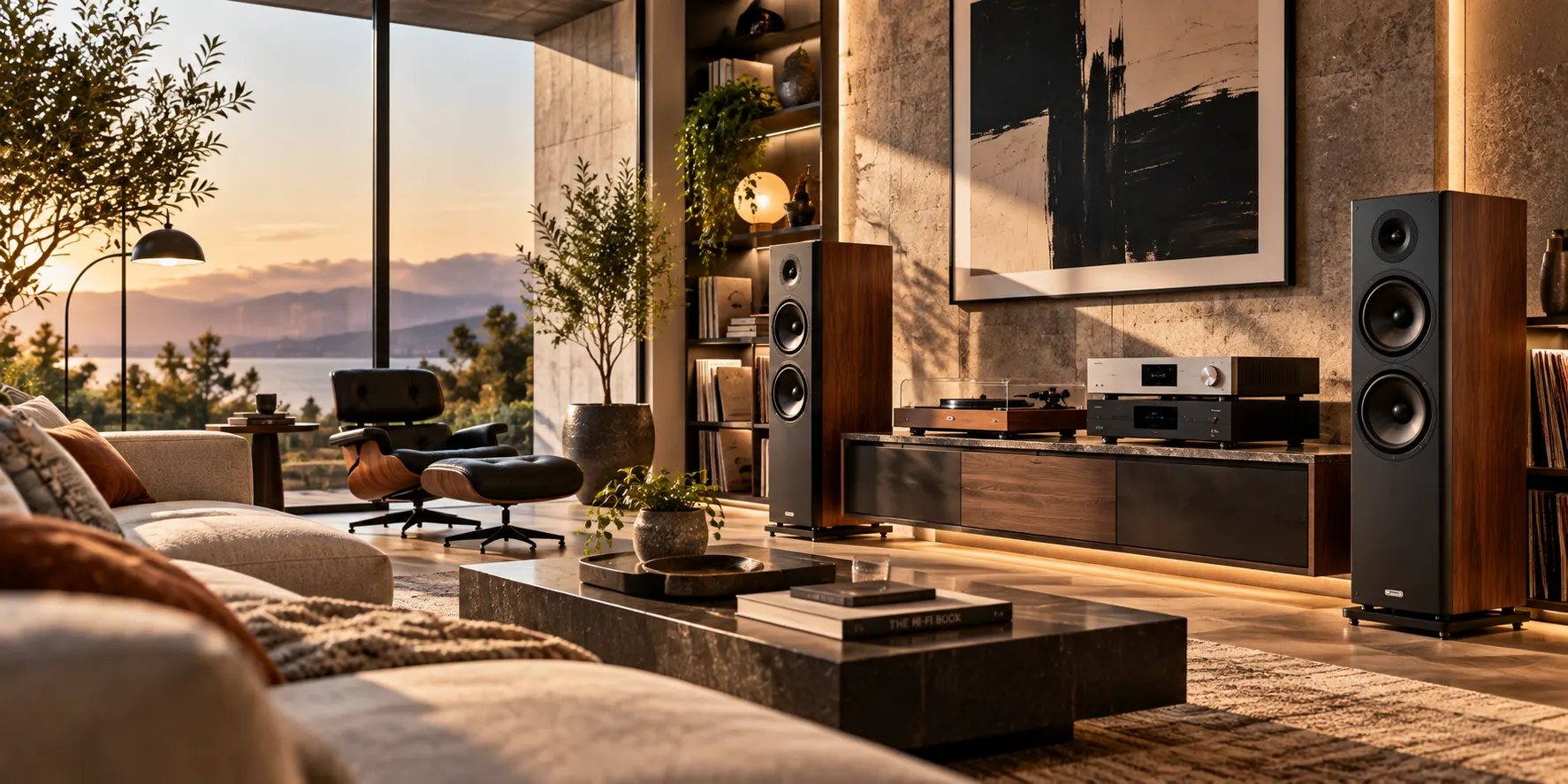
One of the most noticeable developments this year has been the continued introduction of new loudspeakers across different segments of the market.
Manufacturers are continuing to develop bookshelf speakers, floorstanding loudspeakers, active speakers and wireless systems, giving listeners more choices depending on their room, lifestyle and listening requirements.
Recent 2026 releases and announcements include new speaker ranges from brands across the international Hi-Fi industry, showing that traditional loudspeaker design continues to develop alongside newer connected formats.
The fundamental objective, however, remains familiar:
Reproduce music with clarity, scale, detail and a sense of connection to the original performance.
The distinction between traditional Hi-Fi and modern connected audio is becoming less rigid.
Active speakers, for example, integrate amplification directly into the speaker system. This can simplify system design while still allowing manufacturers to focus heavily on speaker performance and digital processing.
Recent industry coverage has highlighted new active loudspeaker systems and products designed to combine high-quality reproduction with modern connectivity.
For listeners, this creates another route to high-quality home audio.
Instead of building a system from numerous separate components, some listeners can now choose a more integrated approach while still maintaining a serious focus on sound quality.
Despite the growth of wireless and all-in-one systems, dedicated amplification remains an important part of the Hi-Fi world.
2026 has seen new integrated amplifiers, receivers and other amplification products from established audio manufacturers, covering everything from traditional stereo systems to sophisticated network-connected equipment.
Modern amplifiers increasingly combine several functions within a single component, including:
At the same time, traditional two-channel amplification continues to have an important place among dedicated music listeners.
This means customers can choose between very different system approaches depending on how they listen.
Streaming has become an important part of modern home audio, but traditional physical formats have not disappeared.
Interestingly, new products continue to bridge the gap between modern digital systems and physical music collections.
For example, FiiO recently announced the DP11, a compact CD player designed for desktop Hi-Fi systems, with USB ripping, digital connectivity and an integrated DAC. The product illustrates how physical media and modern digital audio can coexist within contemporary systems.
For music enthusiasts, this means a modern system does not necessarily have to choose between the old and the new.
A single setup can potentially bring together:
Streaming + Digital Audio + CD + Vinyl + Traditional Hi-Fi Components
Home entertainment is also moving forward.
Modern home theater systems increasingly combine high-resolution audio, immersive surround formats, sophisticated AV processing and room correction technologies.
At CES 2026, Onkyo previewed future home-theater concepts involving next-generation AV processors, amplifiers and receivers, with proposed support for advanced multi-channel processing, multi-room performance and technologies including Dirac Live, Dirac ART and Auracast.
These developments point toward a future where the home theater is not simply a collection of speakers and an AV receiver.
Instead, the entire system becomes increasingly integrated with the room, the display, the network and the user's wider home entertainment environment.
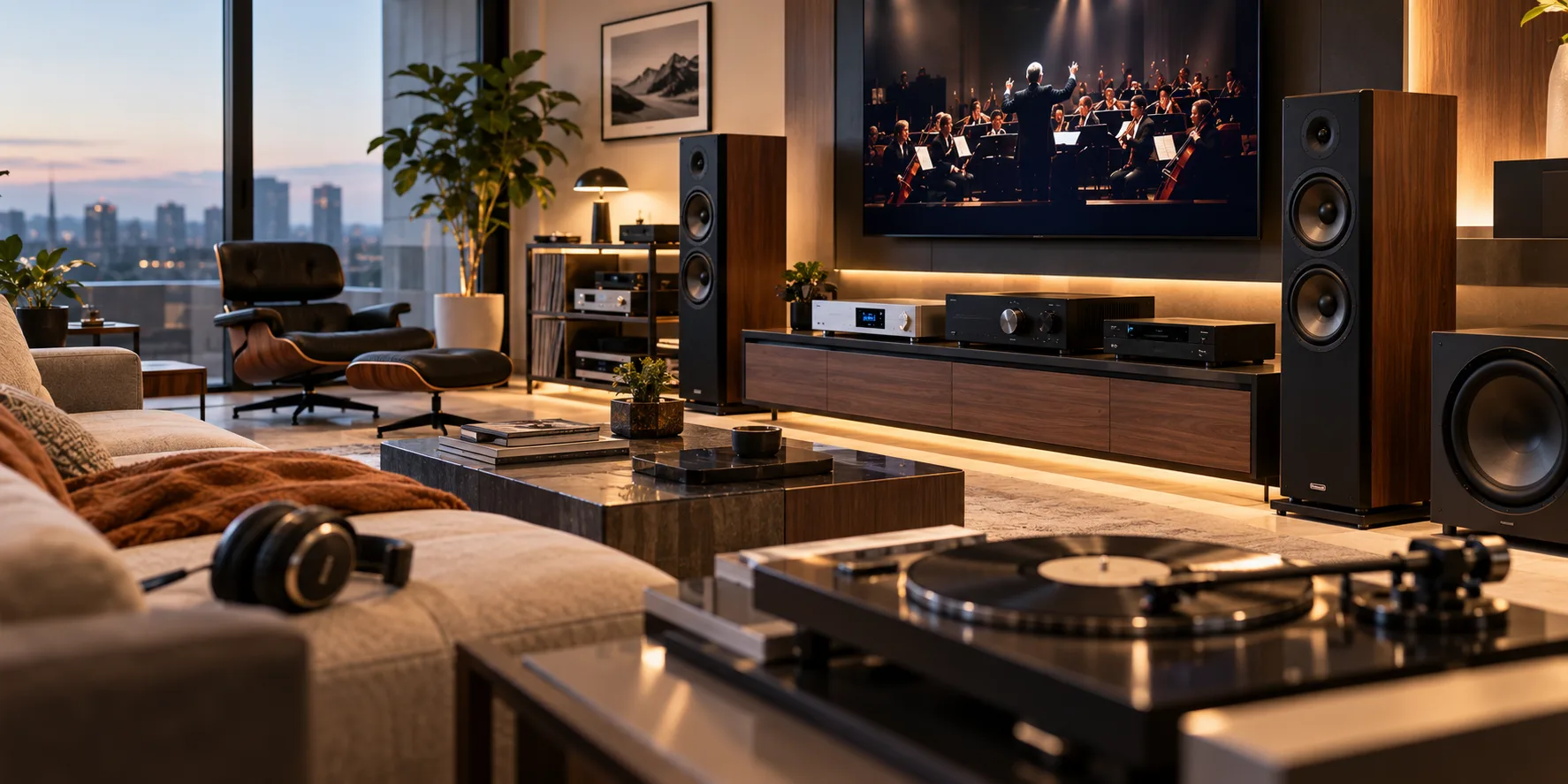
Despite all the technological developments, one fundamental part of audio has not changed:
The room matters.
A sophisticated amplifier cannot completely compensate for poor speaker placement.
A high-performance speaker may perform very differently depending on its position within a room.
The listening position, room dimensions, furniture, surfaces and acoustic characteristics can all influence the way sound is experienced.
This is why system design remains an important part of the modern Hi-Fi experience.
Choosing the right equipment is only one part of the process.
Choosing how those components work together is equally important.
The evolution of home audio is creating more possibilities for listeners.
A customer building a system today might choose:
Separate speakers, amplifier and source components.
Speakers with integrated amplification and digital processing.
Streaming-focused systems connected to digital music services and home networks.
AV processing, multiple speakers, subwoofers and immersive audio.
A combination of streaming, physical media and traditional Hi-Fi components.
There is no single approach that fits every listener.
The right system depends on the room, music preferences, listening habits, equipment requirements and budget.
The current direction of the industry gives listeners more flexibility.
Technology is making systems easier to connect and use, while traditional Hi-Fi manufacturers continue to develop speakers, amplifiers and components for listeners who want dedicated systems.
At the same time, the boundaries between Hi-Fi, home theater, streaming and smart home entertainment are becoming increasingly connected.
The challenge is no longer simply finding more products.
It is understanding which products belong together.
At Reference Point, we believe this is where expert guidance becomes important.
With our portfolio of international audio brands from Australia, Germany, Canada and the United Kingdom, we work across different areas of the audio chain — from loudspeakers and amplification to cables, connectivity and system solutions.
Our approach begins with understanding the listener and the space.
Whether it is a dedicated Hi-Fi system, a home theater, a multi-room setup or a commercial audio project, the objective is to create a system where the individual components work together.
Because the future of home audio is not simply about adding more technology.
It is about using the right technology to create a better listening experience.
As manufacturers continue to develop new speakers, amplifiers, streaming products and home theater technologies, the choices available to listeners will continue to expand.
But the fundamental reason people invest in audio remains unchanged:
To experience music and entertainment in a more engaging way.
From a simple stereo system to a fully integrated home theater, today's audio systems offer more possibilities than ever before.
And at the heart of every system is still the same thing:
Industry developments referenced above are based on recent 2026 reporting from audio-industry and technology publications and manufacturer announcements.
Explore the international brands distributed by Reference Point across India, or speak with our audio specialists about creating a system around your space and listening requirements.